
Tulamben
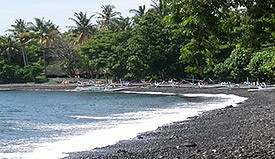
This small village on the north east coast of Bali is the most popular dive area of Bali. Tulamben is 15km to the north of Amed
and lies at the foot of Gunung (mountain) Agung, a strato-volcano that forms the highest point (3142 metres) on the
island.
The Gunung Agung is active again since 10 August 2017 and had its first eruption on 21 November 2017.
This has had a major impact on the tourism in this area and the amount of day divers who want to dive the famous US Liberty wreck.
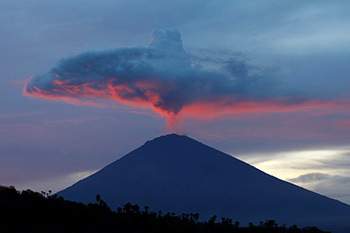
The airport has been closed twice - 26-28 November 2017 and 29 June 2018 - due to ash clouds from the Gunung Agung disrupting the flights.
Last eruption at Agung was recorded on 13 June 2019. Over the past year seismicity had generally decreased; volcanic earthquakes continued to be recorded but at a low occurrence rate.
PVMBG lowered the Alert Level at Agung to 1 - Waspada (on a scale of 0-4) on 13 Septmber 2021.
This volcano dominates the surrounding area and has a big influence on the climate so that the west of Bali is lush and green and the
east dry and barren.
There is - when the volcano stops being active - also a possibility to climb the Mt. Agung,
hiking the Agung mountain.
The name Tulamben was taken from the word Batulambih which means many stones. The area is littered with stones caused by the explosion of Mount Agung. In time, this word changed into Batulamben and eventually pronounced as Tulamben.
Most holiday makers used to prefer Amed over Tulamben, except the serious divers, but since 2014 there are many more hotels and resorts in the area.
There are hotels and resorts only a few minutes away from the bay and dive-sites or stay in a resort or one of the private villas a little further down the
road.
Dive conditions Tulamben
Most dive sites in this area are accessible directly from the coast which is covered with volcanic rocks and cobbles. The seafloor changes at a depth of around 6 metres from rock to sand.
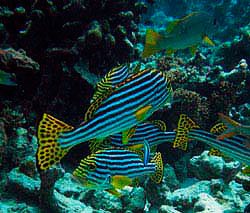
There is an abundance of marine life in this area, ranging from reef inhabitants like Corals, Sponges, Gorgonians, Frogfish,
Ghost-pipefish, Cuttlefish, Boxer crabs and many kind of reef fishes. Also the larger marine life can be encountered here like the Mola mola
(Ocean Sunfish), White and Black-tip reef sharks.
Muck diving can be done here as well, at the Seraya sloop and in the Tulamben Bay area, with its easy shore access, both offer a multitude of exciting critters.
The Tulamben area has it all.
Non-divers will have a pleasant time snorkeling in this area. Conditions are good with normally no or mild north-west flowing currents
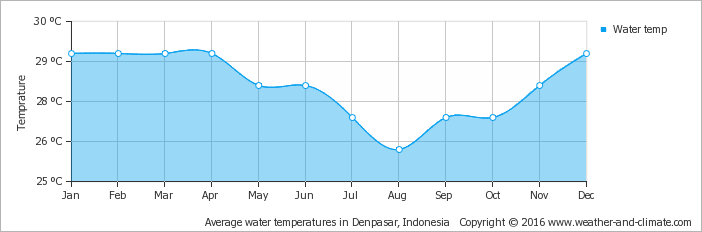
and water of pleasant temperature.
During new and full moon currents pick up.
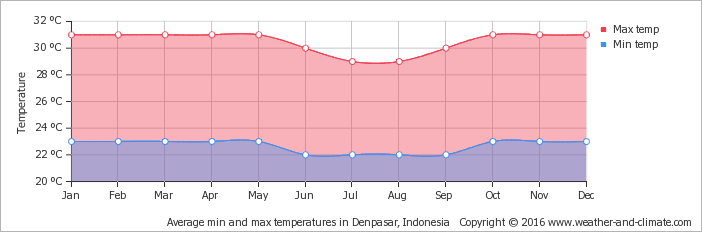
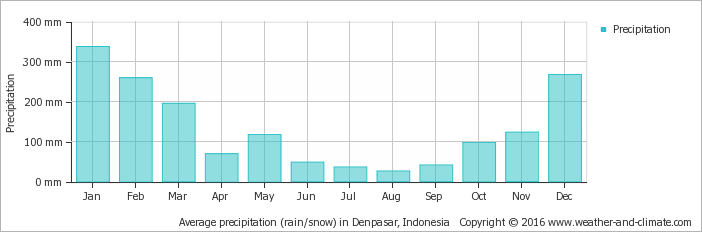
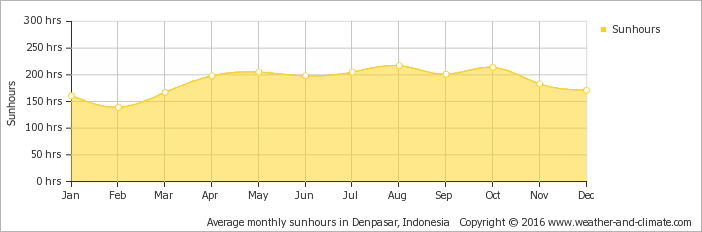
The best conditions to dive Tulamben are at late March until July and the months October and November. During these periods the South East monsoon visits Bali which is responsible for the dry season. See the detailed weather graphs.
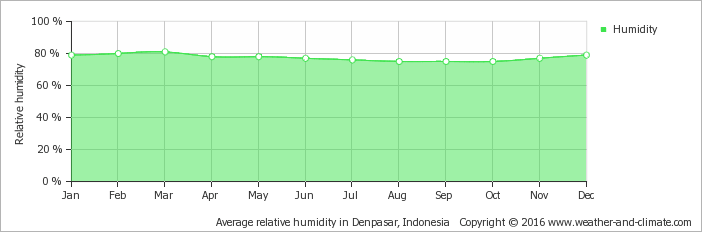
Tulamben annual weather graphs
 © 2010-2015 World Weather and Climate Information
Visibility can reach an awesome 40 metres when you diving in Tulamben at the right time of year. Many dive operators from the south organize day trips to dive on the famous wreck from the USAT Liberty Glo so it is a must to be in the water before 8.00 am.
It is advisable to stay here at least one night so you can start diving early, especially on the wreck, avoiding the big groups from Kuta and other places who will arrive between 8.00-9.00am.
Shark numbers are decreasing at a shocking rate.... What all people, especially divers, should know about the shark population.
Shark population
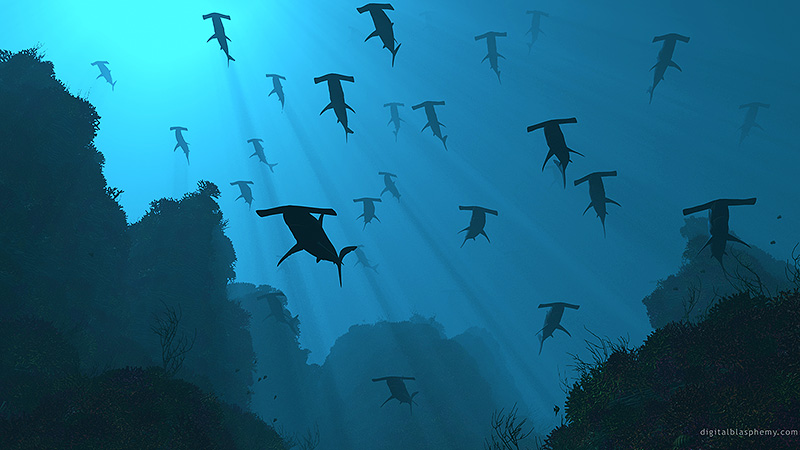
Most divers would love to see sharks, but should realize that there is a great slaughter amongst these apex predators happening every single day.
Indonesia ranks number 1 on the list of top 20 shark catchers.....
Diving in 1995 in the Bunaken national park we encountered sharks every dive. When we went back in 2008 we saw maybe 5 sharks on a total of 60+ dives!
When describing dive sites, we often mention that you might see sharks, but every year the chances are less..
An estimated 100 million sharks a year are killed, mostly for shark fin soup, says a shark researcher of the University of Windsor.
These are the shocking results done by the Institute for Environmental Research published in March 2013 in the journal Marine Policy.
The postdoctoral researcher, Steve Kessel, was part of this research team that came up with a more comprehensive estimate of the number of sharks being killed each year.
Due to the incomplete nature of the data for shark catches, that number could be as low as 63 million or as high as 273 million, but both the high and low end estimates are
considered outside of safe biological limits.
The study also found shark populations cannot reproduce fast enough to overcome that death rate.
There are about 400 species of sharks and 28% of them are threatened by extinction, Kessel said.
“One in every 15 sharks is taken every year”.
The Top 20 shark catchers in descending order are:
Indonesia, India, Spain, Taiwan, Argentina, Mexico, United States of America, Malaysia, Pakistan, Brazil, Japan, France, New Zealand,
Thailand, Portugal, Nigeria, Islamic Republic of Iran, Sri Lanka, Republic of Korea, Yemen.
Sources UNFAO, TRAFFIC 2013
Indonesia and India are responsible for over 20% of global catches between 2002 and 2011. Three EU Member States: Spain, France and Portugal, are among the top 20 shark catchers, responsible for 12% of global catches. Collectively, the 28 EU Member States are the largest shark catching entity of all.
Major hotels that continue to serve shark fin soup include:
Ritz Carlton-Hong Kong
Nikko hotels throughout Asia (headquartered in Japan)
Regal Hotels in Hong Kong
Prince Hotels and Resorts in Japan
InterContinental Group, a UK-based company
This list was comprised in conjunction with Wildlife risk.
Dive sites Tulamben
Use the map to jump to the dive site :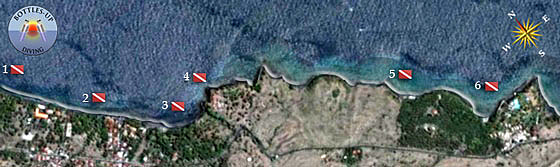
USAT Liberty Glo wreck - [1]
The USAT Liberty Glo, which was beached on Tulamben's shore during world war II and in 1963 pushed into the sea by the lava flow from the Gunung Agung, is one of the most easy wreck dives in the world.
The Liberty is just 30 metres off shore and lies parallel to the beach
in depths between 3 and 29 metres. The currents are usually mild to moderate with a visibility between 10 and 25 metres.
This 128 metres long wreck is totally covered with Corals and Sea Fans and offers a home base for a large variety of marine life!
Many times you will see a gigantic swirl of schooling Jack fish above the wreck. A night dive on the wreck is a must and if you
are lucky you have an encounter with a huge Bumphead parrotfish!!
Coral garden - [2]
This reef is in the middle of the bay, between the Liberty and the Drop-off, and just of the beach.
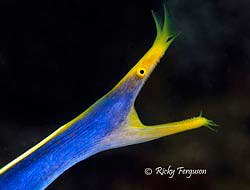
The depth of this shallow reef is between 3 and 18 metres and is covered with beautiful table and fire Corals. You will see Ribbon eels,
blue-yellow or black-yellow, as well as Cuttlefish, Octopus, Titan triggerfish and cleaner Shrimps.
Further down the reef towards the steeper sand slope circle small Black and White-tip reef sharks. Here are Barrel sponges and you
may encounter young Angelfish, Lionfish and schools of stripped Eel catfish.
Like the wreck the Coral garden is a great night dive and an easy one due to the shallow depth and the location.
the River area - [3]
This site is at the end of the bay and offers good protection for young fish in between the rocks. It has a sloping sandy bottom
with a rocky area at the side where the bay ends.
Many times you will see a large Barracuda patrolling this area. On the sandy bottom you can find the Mantis shrimp and some Anemones
with their inhabitants. There are Trompetfish, Cuttlefish, Blue-spotted rays, Titan triggerfish and at dusk small Black-tip reef
sharks swimming around.
This is a shallow dive excellent for beginners, but also very interesting for the more experienced divers.
Drop-off / the Wall - [4]
This dive site is reached from the stony shore at the end of a - most of the year - dry river. It is formed from three old flows of
lava from Mount Agung and drops to a depth of over 60 metres.
The Drop-off can be dived on various levels depending on experience and makes an excellent multi-level dive.
Current is moderate, but can be strong during full and new moon.
It starts off with a steep sloping sandy drop with Nudibranchs, Shrimps, Leaf scorpionfish and Crinoids. The slope becomes a
magnificent reef which develops to a vertical wall, beginning at 15 metres descending down to 60 metres.
At 30 metres you cannot miss the amazing sight of a 3 meter sized Gorgonian.
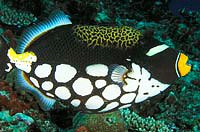
It is likely to come across White-tip reef sharks, big Napoleon Wrasse, Triggerfish, Bumphead parrotfish and Moray eels.
In the shallows from 5 metres and above there is an abundance of reef fish and other small marine life therefore a nice
place to do your safety stop.
Other dive sites in the Tulamben area
A few minutes drive either east or west of Tulamben are many dive sites that haven't been named yet or are still waiting to be discovered. We will describe some of the already known sites......
Batu Kelebit - [5]
Located east from Tulamben bay and is reached by Jukung in about 10 minutes. Batu Kelebit consists of two large underwater rocks and
three steep ridges which drop to a depth between 30 and 50 metres.
The water temperature is colder than Tulamben due to a coldwater whirlpool and the current can be strong with a visibility between
15 and 20 metres.
The plankton in the water and the steepness of the ridges give you a good chance to see big fish like Shark, Manta, Tuna and Barracuda.
Seraya secrets - [6]
A 10 minute drive to the east of Tulamben brings you to the beach in front of the Seraya resort.
The bottom drops steadily to a depth between 3 and 9 metres and is known as "Top Secret" and visibility is between 10 and 15 metres.
There is not much Coral, but an abundance of small marine life and Frogfish, Eels, Scorpion and Lionfish.
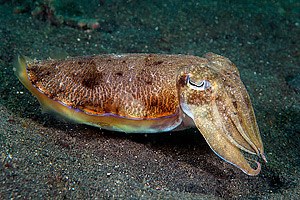
On the sloping bottom from 10 metres to 35 metres you enter the site known as "Deep Secrets" where you are likely to find Seahorse, Cuttlefish, mimic Octopus, Striped catfish, Harlequin and Tiger shrimps and larger Frogfish.
Kubu (not on the map)
Just a few kilometres to the west of Tulamben is the village of Kubu from where you can make a shore dive. This site has a healthy reef
with hardly any current, visibility up to 30 metres and a depth between 5-40 metres.
Here you will see a large variety of fish including
regular sightings of Barracuda, Sharks and Bumphead parrotfish.
This is a site where you might see the Pygmy seahorse!
 |
|