
Labuan Bajo - West Flores
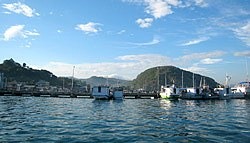
The harbour town Labuan Bajo is situated at the western tip of Flores and can be reached with a direct domestic flight from Bali. It
is only recently that Flores has become more and more popular with visitors who are willing to see some more Indonesia's rich and
diverse landscape both under and above water.
When we first visited Flores in 2003 accommodation was still very basic but this has changed with the opening of a couple of European run places in the town
and a few high-end resorts just outside of Labuan Bajo.
With the increased number of visitors the choice and quality of the restaurants have also improved.
From Labuan Bajo you can do one- or multiple day trips over land; volcanic lakes, waterfalls, limestone caves, a famous 'snake cave' and real good hiking and trekking.
You can also continue your trip overland all the way to Maumere at the east side of Flores and take a direct flight back to Bali.
Diving from Labuan Bajo can either be done as a day trip or with an overnight stay on board if you want to go more into the Komodo National Park.
Dive conditions west of Labuan Bajo
Diving around here is rated amongst the best, together with Raja Ampat, Maluku islands and many more. Best diving means currents and is often not easy.
The currents here seem to be more unpredictable, because the Indonesian throughflow hits the island straight on in the north.
This makes for shifting currents and eddies but also attracts large fish in quantity!
Average water temperature: 27°-28°C with an average visibility of 25-35 metres.
The marine life here is similar to that found in most tropical seas.
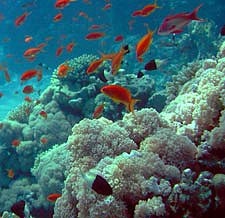
The Coral reefs are rich with colourful combinations of hard and soft Corals.
Here you will be stunned by the ever present schools of Anthias, Wrasse, majestic Angelfish, and larger predators - Reef sharks and Giant Trevally.
Day trips to the dive sites mentioned below vary from ½ hour to 2 hours to the furthest islands.
Shark numbers are decreasing at a shocking rate.... What all people, especially divers, should know about the shark population.
Shark population
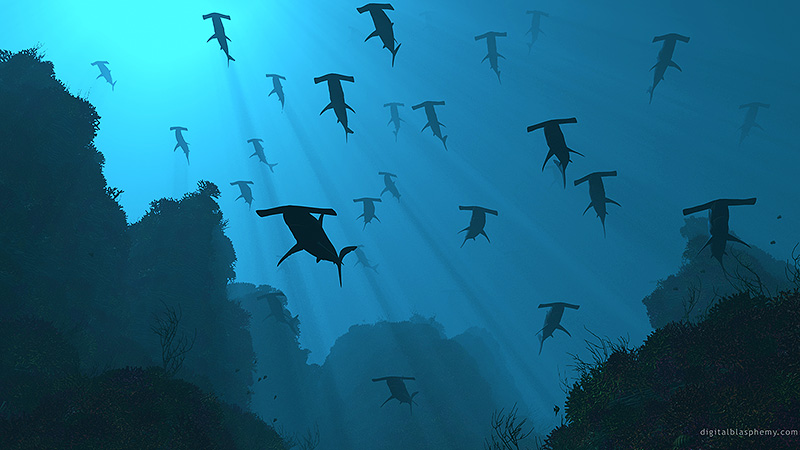
Most divers would love to see sharks, but should realize that there is a great slaughter amongst these apex predators happening every single day.
Indonesia ranks number 1 on the list of top 20 shark catchers.....
Diving in 1995 in the Bunaken national park we encountered sharks every dive. When we went back in 2008 we saw maybe 5 sharks on a total of 60+ dives!
When describing dive sites, we often mention that you might see sharks, but every year the chances are less..
An estimated 100 million sharks a year are killed, mostly for shark fin soup, says a shark researcher of the University of Windsor.
These are the shocking results done by the Institute for Environmental Research published in March 2013 in the journal Marine Policy.
The postdoctoral researcher, Steve Kessel, was part of this research team that came up with a more comprehensive estimate of the number of sharks being killed each year.
Due to the incomplete nature of the data for shark catches, that number could be as low as 63 million or as high as 273 million, but both the high and low end estimates are
considered outside of safe biological limits.
The study also found shark populations cannot reproduce fast enough to overcome that death rate.
There are about 400 species of sharks and 28% of them are threatened by extinction, Kessel said.
“One in every 15 sharks is taken every year”.
The Top 20 shark catchers in descending order are:
Indonesia, India, Spain, Taiwan, Argentina, Mexico, United States of America, Malaysia, Pakistan, Brazil, Japan, France, New Zealand,
Thailand, Portugal, Nigeria, Islamic Republic of Iran, Sri Lanka, Republic of Korea, Yemen.
Sources UNFAO, TRAFFIC 2013
Indonesia and India are responsible for over 20% of global catches between 2002 and 2011. Three EU Member States: Spain, France and Portugal, are among the top 20 shark catchers, responsible for 12% of global catches. Collectively, the 28 EU Member States are the largest shark catching entity of all.
Major hotels that continue to serve shark fin soup include:
Ritz Carlton-Hong Kong
Nikko hotels throughout Asia (headquartered in Japan)
Regal Hotels in Hong Kong
Prince Hotels and Resorts in Japan
InterContinental Group, a UK-based company
This list was comprised in conjunction with Wildlife risk.
Dive sites west of Labuan Bajo
Use the map to jump to the dive site :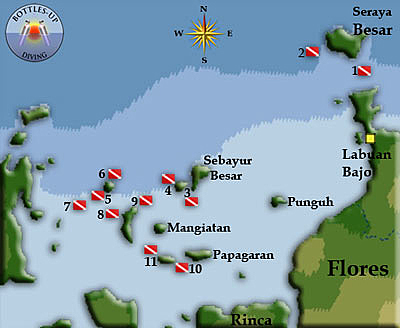
Note:
the islands along the fringe of the national park are also part of live-aboard tours into the Komodo National Park....
Seraya - [1]
We have not dived here nor have we any information on this dive site....
Sabolan Kecil - [2]
This is another good site within easy reach of Labuan Bajo.
On the west side of the island there is a small white sandy beach.
At the northern most point of the beach where the sand meets the rocks is the best point to enter.
The entire island is surrounded by great looking Coral and one could probably do several different dives here.
Lots of Fans, Sponges, and colourful soft Corals. Most of the deeper hard Corals seemed old and dead but the soft Corals and Fans are stunning.
The water clarity is usually good and so is the dive; great spot to start exploring the rest of the region.
Mini Wall - [3]
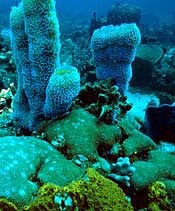
The whole north face of this island is good diving.
There are Garden eels on the sandy slopes, and Shrimps, Gobies and Sweetlips are
common. Occasionally, Mandarin fish have been spotted in shallow water.
This site also features beautiful Coral gardens with a high abundance of both hard and soft Corals.
This dive is an excellent refresher / check-out dive or just a nice easy dive with good
visibility, calm conditions and no current.
This site can be divided as 2 dive sites, first one the entry point is marked by a long, low, rocky point east of the beach, which is at the center of the island's northern coast. Around the point the reef slope will turn into a wall that drops to about 35m depth.
A second dive can begin at the sandy slope and continue counter-clockwise across the front face of the beach to where the reef turns north and juts out to another point.
Sebayur Kecil - [4]
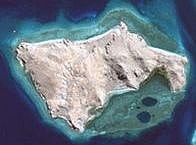
The north western corner of Sebayur Kecil is one of the great dive sites in close proximity to Labuan Bajo.
A fringing reef extends north-west where it drops of to 30-40 metres. Depending on the current you can dive this wall to the east or to the west.
There are some large boulders around where schools of Giant trevally, White-tip reef shark, Coral grouper, Snapper and
Emperor angelfish can be seen. There are good opportunities for both macro and wide-angle photography, though currents can be quite strong in this
area.
Tatawa Kecil - [5] (within Komodo National Park borders)
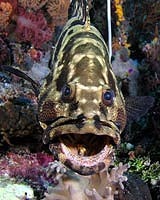
A small island south-west of Tatawa Besar island offers fantastic snorkeling when the current is not too strong.
It is best to dive the western side of the island with rocks, caves and beautiful Coral gardens in the shallows. Many Coral reef fish,
including large Groupers, Snappers, Sweetlips, Jacks and Sharks swim around.
Tatawa Kecil is probably the Anthias, colourful Serranide fish, capital of the world!
What's more, Dugongs, Dugong dugong, have been spotted here.
Manta eays are often seen on the Coral plateau on the southern side, so keep your eyes open during safety stops.
Tatawa Besar - [6] (within Komodo National Park borders)
Starting at the north western tip of Tatawa, there is a great drift dive down the western side at about 15 to
20 metres deep on a very beautiful fringing reef. Excellent reef fish life and an endless field of orange soft Corals, Barrel sponges,
and small boulders harbouring a wide range of fish life. Manta rays are often seen in this area.
It is also possible to drift up the north coast of Tatawa Besar from the same entry point, offering a similar dive.
Tatawa Besar is a good alternative when the current is too strong to dive Tatawa Kecil or
Batu Bolong.
Batu Bolong - [7] (within Komodo National Park borders):
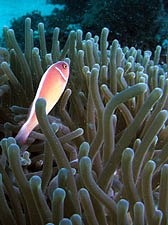
Batu Bolong is a tiny rock island in the strait between Tatawa and Komodo, definitely one of the very best Komodo has to offer.
This area is undamaged because the current and topography (steep walls) makes it impossible for local fishermen to
use their dynamite and cyanide fishing techniques.
Depending on the current you dive either the northern or southern side while the other
side is inaccessible. Only on very rare occasions at slack tide you can actually swim all around the rock. The dive starts right at the
surface with beautiful Corals along with other invertebrates and thousands of small colourful fish. In deeper water along the steep walls,
many large fish including Sharks, Manta rays, Napoleon wrasse, Giant Trevally, Dogtooth tunas, and large schools of Rainbow runner will
greet you.
Siaba Kecil & Siaba Besar - [8 + 9] (within Komodo National Park borders):
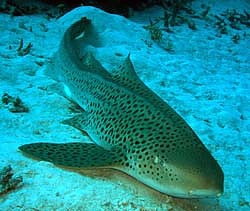
Airstrip: the strangest dive site in the park!
A very long stone rubble road stretching forever along the east coast of Komodo.
It gently slopes off and has big Coral heads at intervals along the road, where you can shelter behind from the current and
to check out the marine life there, before taking off in the current again.
Here you find a cleaning station often visited by Manta rays.
Under the Coral ledges you may spot White and Black-tip sharks, Nurse sharks and Bamboo sharks.
Leopard shark as well as Dugongs have been seen around here. Bumphead parrotfish like the area and many strange Nudibranchs can be found.
Pengah Kecil & Pengah Besar - [10 + 11] (within Komodo National Park borders)
We have not dived here nor have we any information on this dive site....

Other locations
Other dive locations which can be reached easily from Bali or direct from your home country...
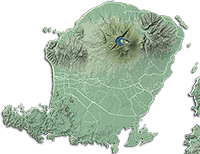


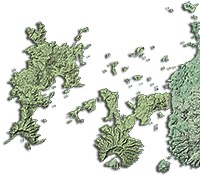

 |
|